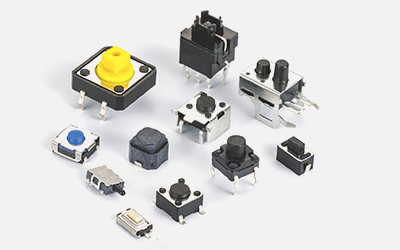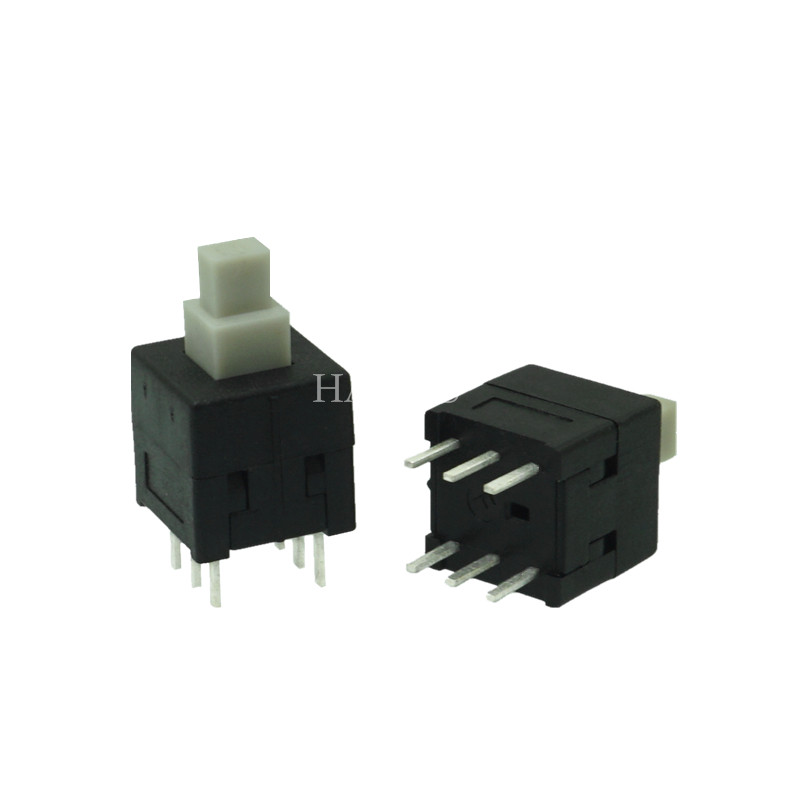
Self locking electronic switches are one of the most common key switch products, but what is the difference between tactile switches and self-locking switches? Self locking switches are commonly used as power switches for electronic devices. Self locking switches are composed of a housing, a base, a handle, a torsion spring, and a code piece. After holding down for a certain distance, the handle will be locked by the lock and turned off; Pressing it again will return to any part, which is broken. The electronic device tactile switch is suitable for adjusting a part of electronic devices. The tactile switch is composed of a base, a spring plate, a rear cover plate, and a handle. By increasing the vertical angle force on the handle until the spring plate deforms, the circuit is turned off. The vertical angle force disappears, and the spring plate repairs the deformation, causing the circuit to break. Both tactile switches and self-locking switches have various specifications and models to choose from, and the selection should be based on the actual application and natural environment.
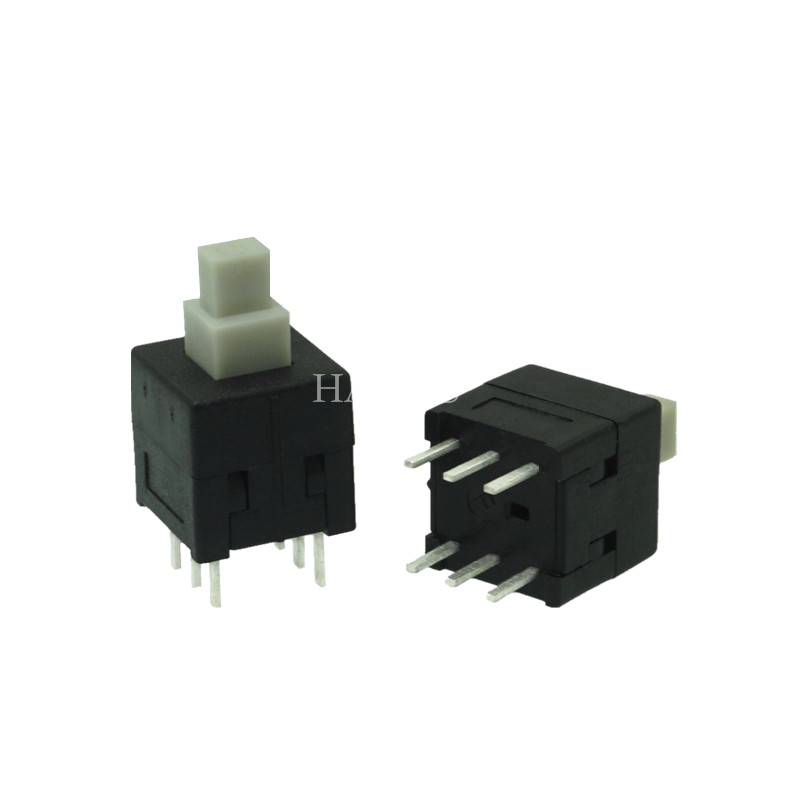
The difference between self-locking electronic switch and light press switch:
The performance of self-locking electronic switches and light press switches is different. The self-locking switch can maintain the locked or enabled state of the circuit according to its special structural performance. As for the tactile switch, it requires constant energy consumption to maintain its function. At the same time, the touch switch can change its state without consuming too much energy during use. The volume at the contact point level is very small, and this type of switch is relatively simple to construct in production. After the energy of the switch disappears, it can only be maintained in its original state.
Self locking electronic switches often focus on their own self-locking function. They have specific guidance on their usage directions, and paying attention to whether they have self-locking function results in a very obvious directional switch. Such switches have self-locking equipment and performance, and can maintain a disconnected or connected state according to their self-locking performance. In fact, self-locking electronic switches and tactile switches describe switch performance from different perspectives. Self locking refers to the ability of a switch to maintain the circuit state based on the locking organization, while a light touch indicates the actual amount of energy applied to operate the switch.
 Haofu ElectronicsFocused on switch/socket/connector manufacturers
Building D, Fuhui Chuangyuan Industrial Park, Dongjiang Road, Huangjiang Town, Dongguan City