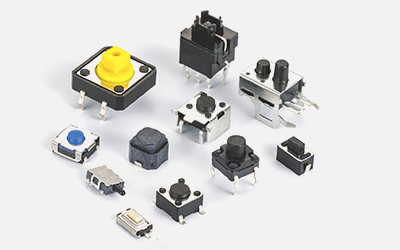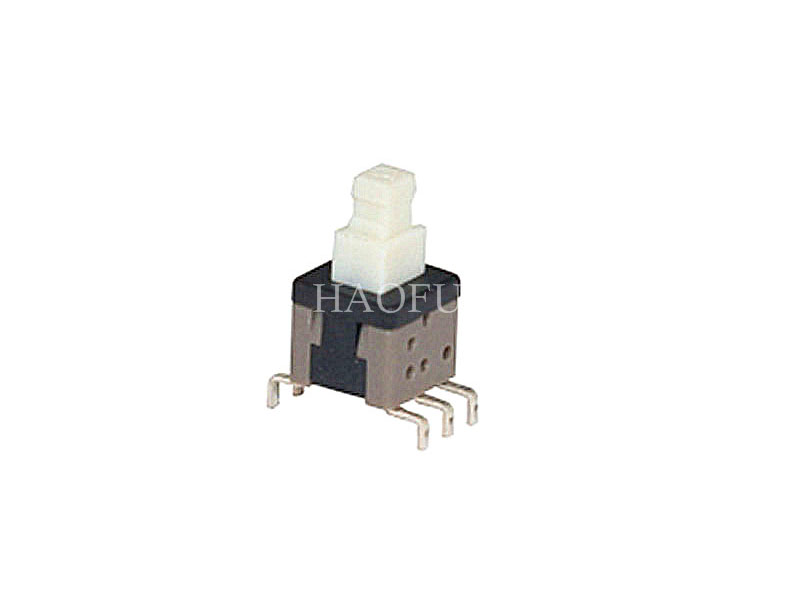
The working principle of waterproof button switches is based on the combination of mechanical triggering and sealing protection: the circuit is turned on and off through the mechanical action of the button, and at the same time, special structural design and sealing materials are used to prevent liquids and dust from entering the internal circuit, ensuring reliable operation in humid or underwater environments. It can be divided into two parts: mechanical triggering principle and waterproof sealing principle:
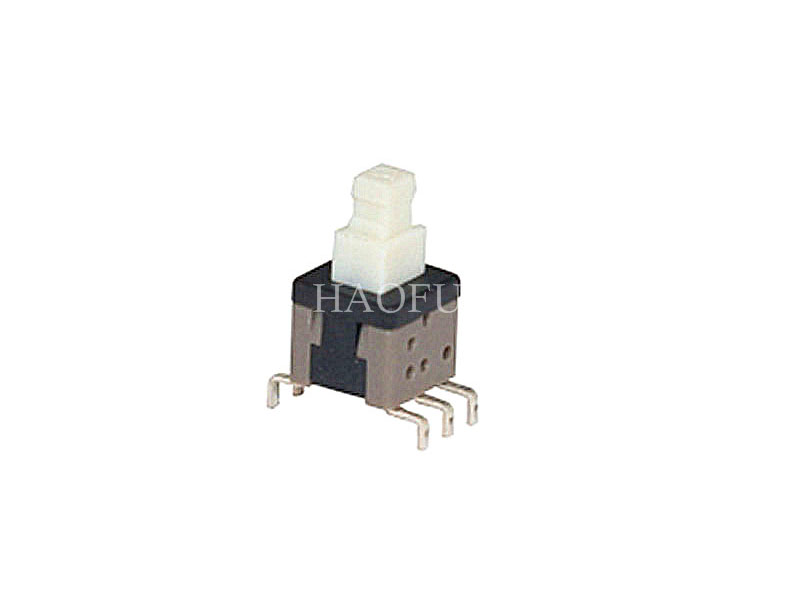
1、 Mechanical triggering principle (circuit on/off core)
Consistent with the circuit control logic of ordinary key switches, the contact state is changed through the pressing/resetting action of the key to achieve the conduction or disconnection of the circuit. It is mainly divided into the following two structures:
Contact type structure (most common)
The switch contains moving contacts (which move with the button) and stationary contacts (fixed on the base). When not pressed, the moving and stationary contacts separate and the circuit is disconnected;
When pressing the button, the button pushes the moving contact downwards through the connecting rod, making contact with the stationary contact and conducting the circuit;
After releasing the button, relying on the rebound force of the spring (or spring), the moving contact is reset and the stationary contact is separated, and the circuit is disconnected.
The contact material is usually silver alloy (with good conductivity and oxidation resistance), ensuring reliable contact after long-term use.
Contactless structure (high-end model)
Using non mechanical contact methods such as Hall elements and photoelectric sensors: when the button is pressed, the magnet/light shielding plate moves with the button, triggering the sensor to output an electrical signal (such as high and low level switching), and controlling the circuit to turn on and off;
No physical contact wear, longer lifespan (up to millions of times), suitable for high-precision scenarios (such as medical equipment).
2、 Waterproof sealing principle (core of environmental protection)
The key to waterproofing lies in blocking the liquid entry path through a multi-layer sealing structure, and the core design includes:
Outer sealing: blocking the invasion of external liquids
Sealing of the gap between the button and the housing: Elastic sealing components (such as silicone sealing rings and rubber gaskets) are embedded at the joint between the button cap and the switch housing. The sealing ring section is usually "O-shaped" or "lip shaped", and when pressed, it slightly deforms with the button, always tightly fitting the gap to prevent liquid from infiltrating through the gap.
Overall sealing of the shell: The switch shell is made of integrated injection molding (such as PC, ABS material) to avoid splicing gaps; If there is a wiring port, use waterproof connectors (such as M12 threaded connectors+silicone sealing rings). When the cable passes through, tighten the sealing ring with a nut to achieve sealing.
Inner layer sealing: protects the core circuit
Independent sealing of contact chamber: The chamber where the dynamic and static contacts are located is completely isolated from the outside, sealed with sealant (such as epoxy resin) or rubber diaphragm. Even if a small amount of liquid breaks through the outer seal, it cannot come into contact with the conductive components.
Elastic body overall wrapping: Some small waterproof switches (such as film type) use silicone elastic body to wrap the buttons and internal circuits as a whole. When pressed, the elastic body deforms and transmits force, while the sealing of its own material prevents liquid penetration.
Drainage/anti siphon design (auxiliary protection)
A small drainage hole is reserved at the bottom of the shell (only allowing gas circulation, liquid cannot enter) to avoid the pressure difference caused by temperature changes inside, which may cause liquid to be "sucked in";
The button cap adopts a tilted or convex design to reduce liquid residue and prevent water from seeping into the gaps.
 Haofu ElectronicsFocused on switch/socket/connector manufacturers
Building D, Fuhui Chuangyuan Industrial Park, Dongjiang Road, Huangjiang Town, Dongguan City